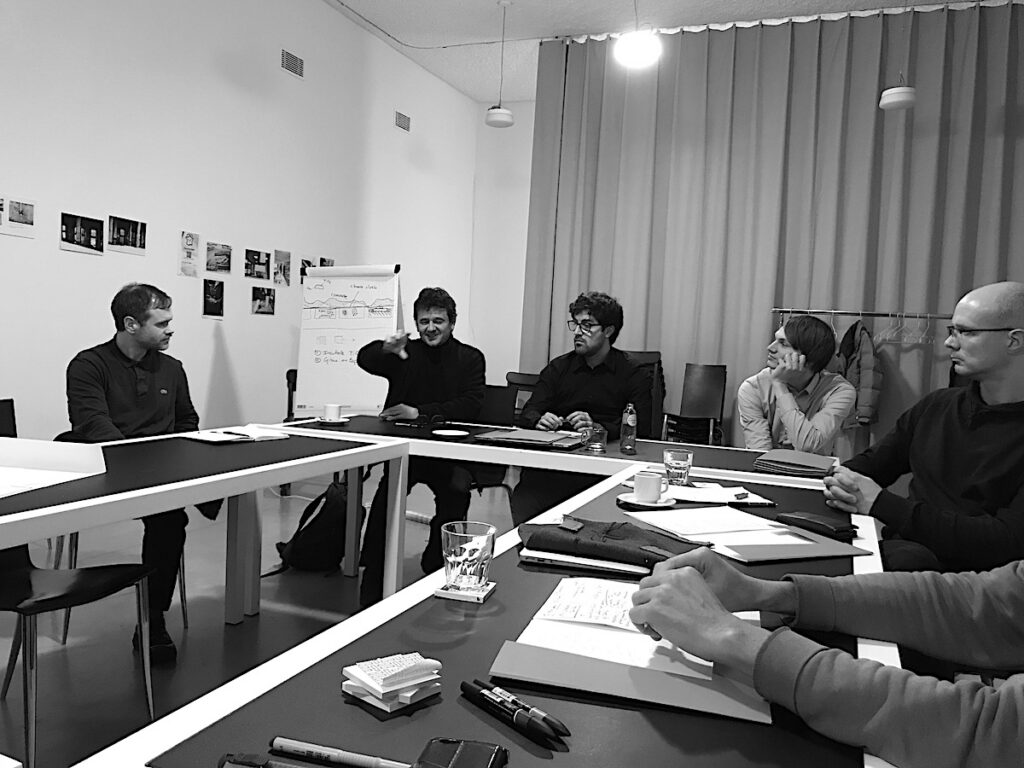
On 12 & 13 December, the second of three internal Koelleven workshops is hosted by the lab for experimental physics, X-LAB, at UHasselt.
The aim
Having now gained a perspective on enacting an attuning experiment in the cooling tower basin of the nuclear research facility of SCK CEN in Mol, BE, we used this workshop to further the ways of proceeding.
Hello, where are we
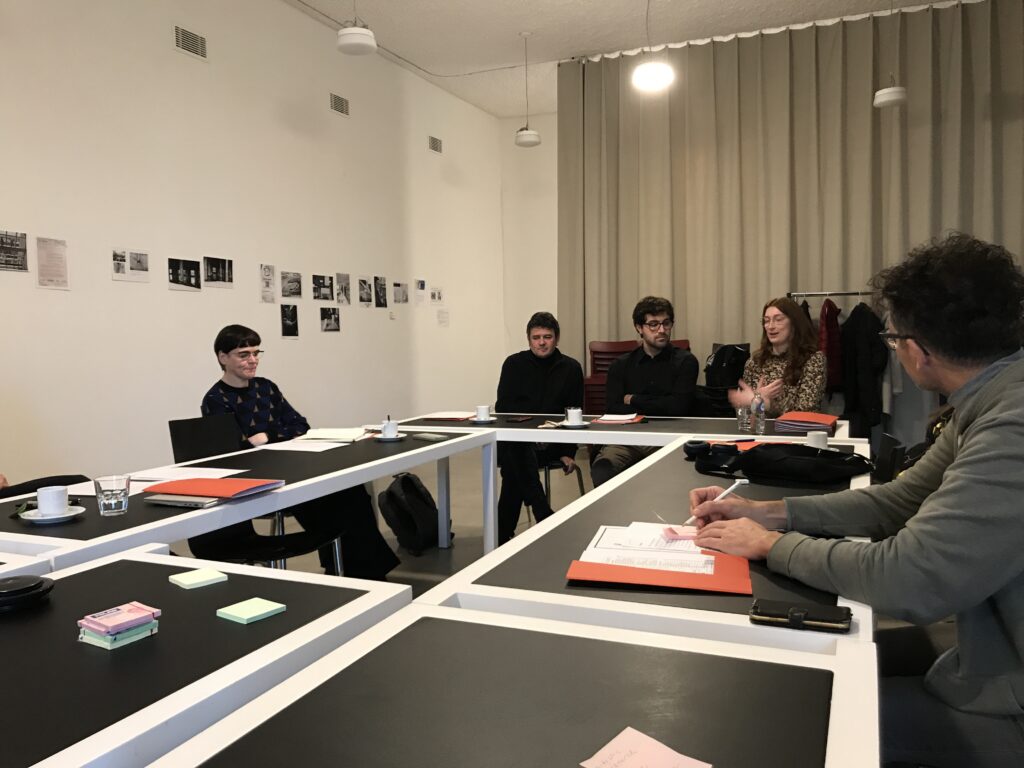
The first day takes place in the centre of Hasselt at Z33, where we are kindly welcomed by its artistic director, Adinda Van Geystelen. Then, Bart summarises the period from Workshop I until the here-and-now, using the black-and-white prints from the Koelleven process so far — the same prints used during the research talk at SOLU, the headquarters of the Finnish Bioart Society in Helsinki.
Cooling Tower Microbiomes Colour
Anne gives a presentation about “Microbiological colour: workings & sensings”. Bacteria perceive colours and make use of them via a range of pigments allowing absorption or detection of light of different wave lengths. They are used:
- for harvesting solar energy to convert it to chemical energy
- to protect from UV-light and oxidative stress
- as a trigger for gene expression involved in lifestyle decisions at the interface of light/no light situations
Related to a part of our research interest and narrative, namely the use in solar cells of bacterial pigments originating from biofilms in cooling towers, Anne´s group analysed biofilm samples from SCK and Tihange. In the case of SCK, the cooling tower basin is filled with groundwater, with air flowing through with an aeromicrobiome that contains microbes from the nearby pond on the light-rich south-east side, and the pine-tree-rich forest on the shadowy north-west side. As for Tihange Power Station, its cooling water is taken from the nearby river Meuse, with the river´s microbiome then encountering the urban aeromicrobiome of the adjacent city of Huy.
The microbiological protocol consisted of these classic steps:
- Dilution series of samples (0 to 1000-fold)
- Plating on medium R2A
- Incubation 25˚C
- Isolation of pure bacteria
- Partial 16s rRNA gene sequencing
- Identification by comparison to database
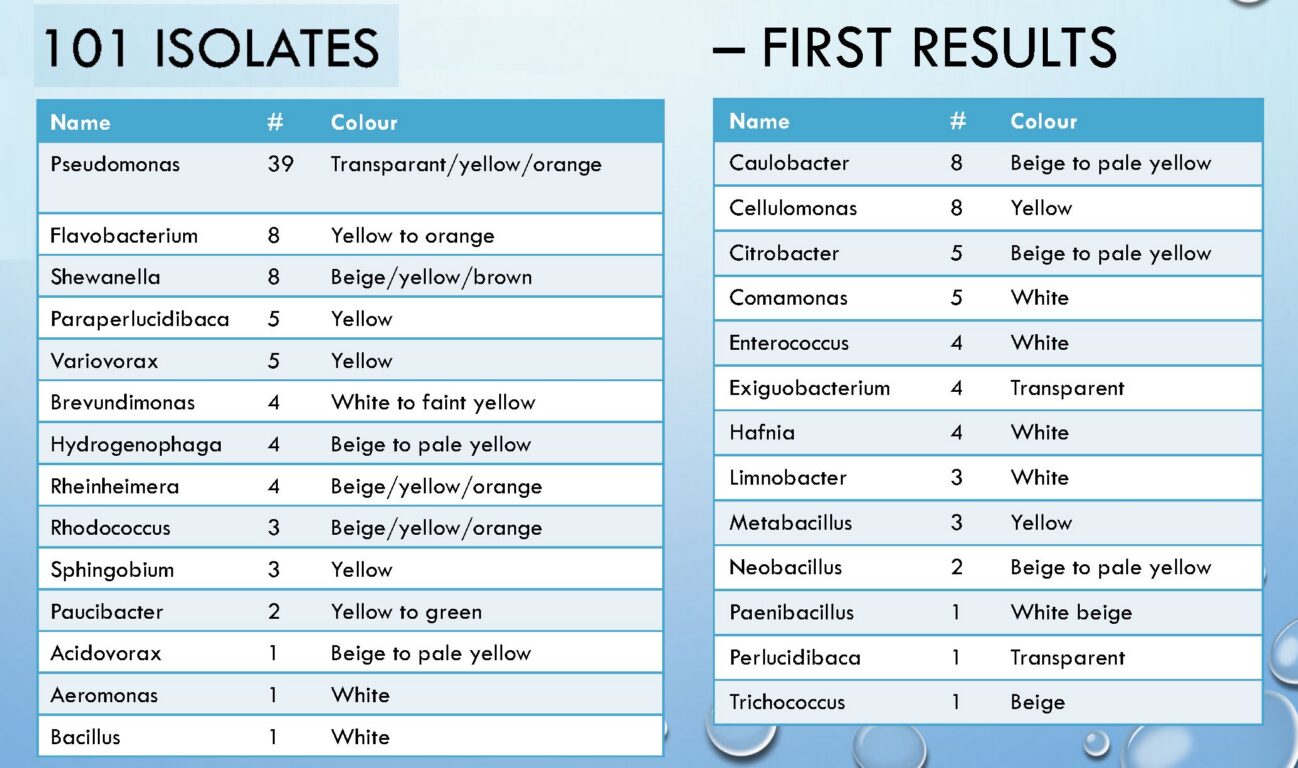
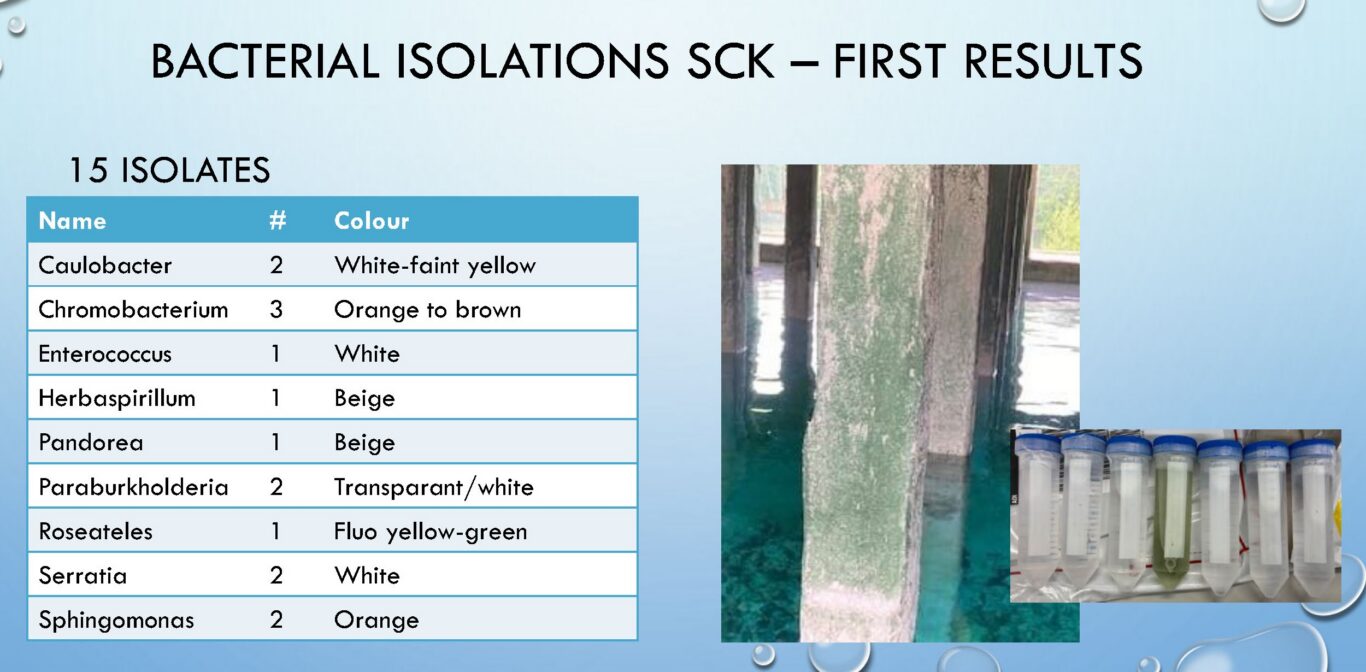
Anne points out that we cannot yet compare the two biotope biofilms because the number of isolates from each type of water is too different (15 SCK vs 101 Tihange). The coloured organisms from river water that have been identified are listed here:
Guest talk: Colour & Light in Art´s History
As in the first workshop, we invite experts connecting to a Koelleven tangent. Filippo Morino teaches molecular quantum mechanics at UHasselt and is also a photographer with a multidisciplinary attitude toward the whole body of human knowledge, including art, history, and philosophy. “Maybe a Renaissance man lost in the post-modern age…” he writes in his short bio. His presentation pulls our attention into his historical approach to “Looking Backward to Colour and Light, Outside the Contemporary”.
Cooling Tower Biofilm Attuning Experiment
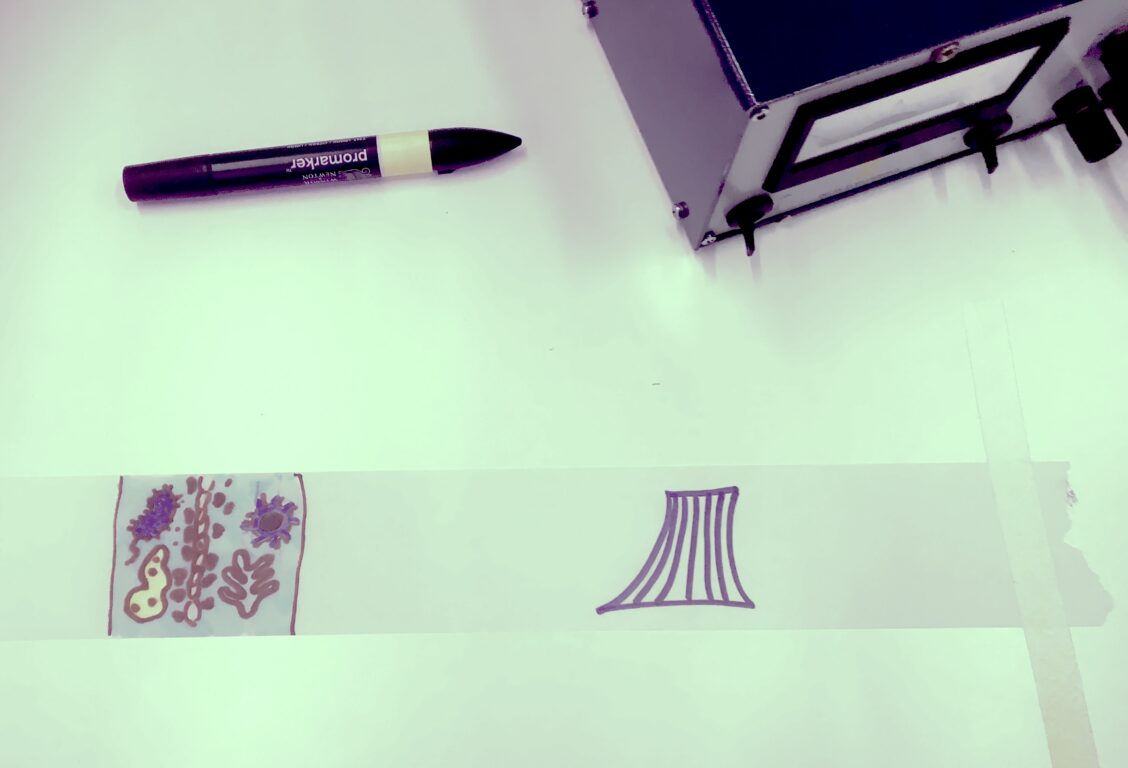
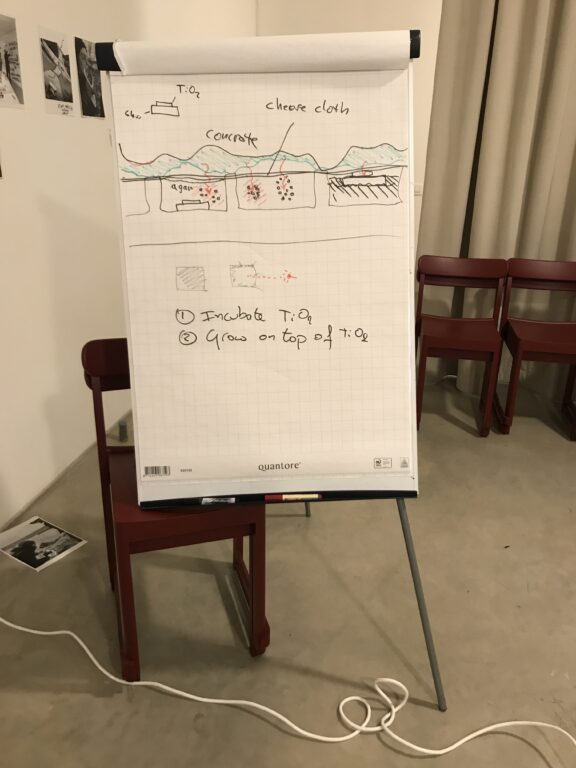
Janne and Bart present the status of the proposal for the attuning experiment in the cooling tower basin of the nuclear research facility SCK CEN in Mol. It investigates if there is a way to respectfully and non-extractively bring a piece of glass – part of a solar cell – that is coated with Titanium dioxide solar can be coloured through direct contact with the cooling tower biofilms. We discussing the now-ready custom-made Petri panels — a 30 x 40 x 3 cm acrylic version of the smaller Petri dish — which will be used in the experiment (see picture). The protocol will be shared with SCK so they can make informed decisions on the experiment’s scope and practical implications.
This experiment ties our thinking together energetically, with participants eager to contribute ideas and suggestions. Janne notes that this is “partly because it offered a tangible concept and plan to comment on, but also partly because it limited the options. A classic creativity technique: suddenly not everything was possible, and instead a creative space was framed around the concept.”
Following Janne’s suggestion, we will plan the experiment further through a shared document and online meetings, where everyone can contribute research questions or proposed setups. Hopefully — and ideally — we will receive more suggestions than we can carry out, leading to a discussion about which ones to include in the experiment. This would be a natural and beneficial way of bringing the project participants together, enhancing communication and cohesion among the players on the Koelleven playfield, all working toward a common goal.The final detailing of the Petri panels will happen during the third workshop at Aalto University.
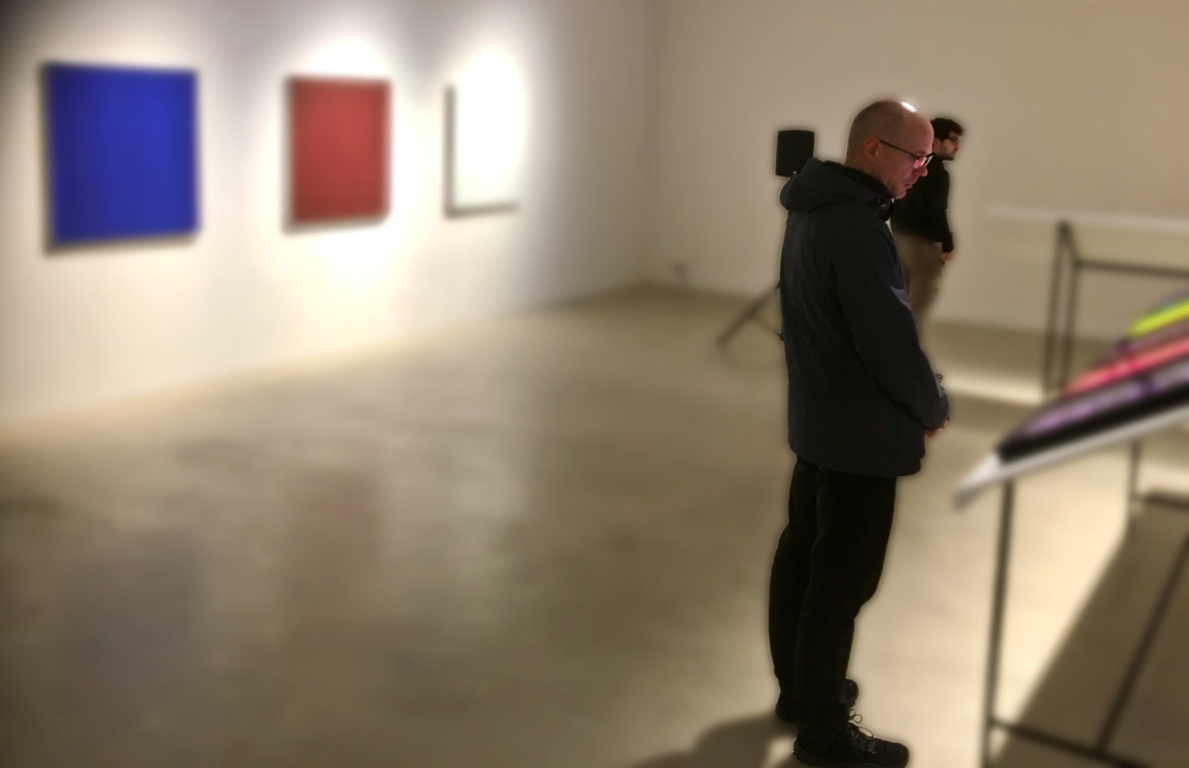
After the discussion on documentation, archiving & communication, guided by Christina and Bart, we end the day with a guided visit to the “This Is Us” exhibition at Z33, led by curator Kevin Gallagher (see picture), followed by after-talks over dinner.
Lorem ipsum dolor sit amet, consectetur adipiscing elit. Ut elit tellus, luctus nec ullamcorper mattis, pulvinar dapibus leo.
Lorem ipsum dolor sit amet, consectetur adipiscing elit. Ut elit tellus, luctus nec ullamcorper mattis, pulvinar dapibus leo.
X-LAB
The next day, Jean welcomes us at the X-LAB premises, past of Hasselt´s Diepenbeek Campus. He presents the transversal workings of X-LAB in the context of Koelleven — and with Allyson guides us though their science tower.
Allyson then offers a hands-on workshop & experiment on her PhD research topic , photographic photovoltaics. She shares ways of integrating an image into coated glass pieces that are the main material of a type of solar cells where natural colours (organic, biological) are used to convert light into electricity (so-called dye-sensitized solar cells). In between the afternoon talks we do some graphic modelling of masks for the light etching.
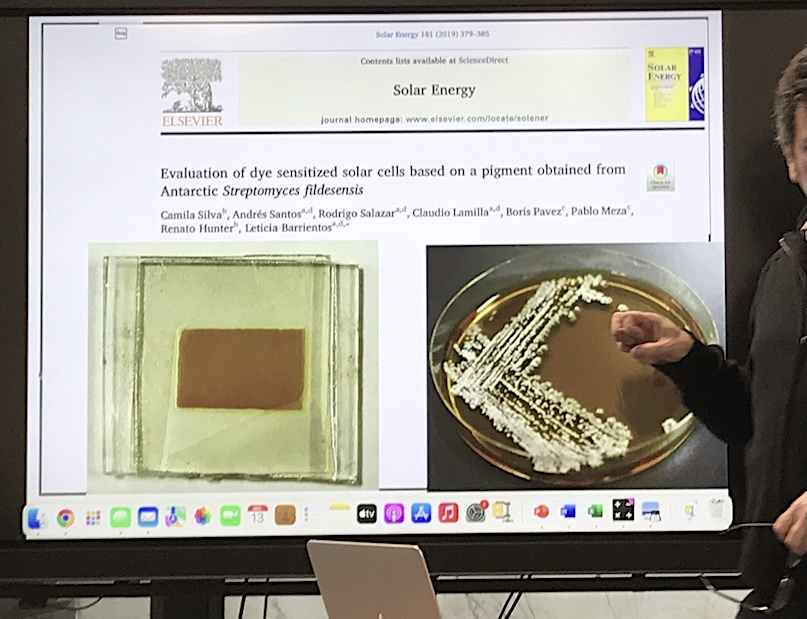
Jean elaborating upon one of the few scientific papers on using microbial pigments as agential resource for dye-sensitised solar cells.
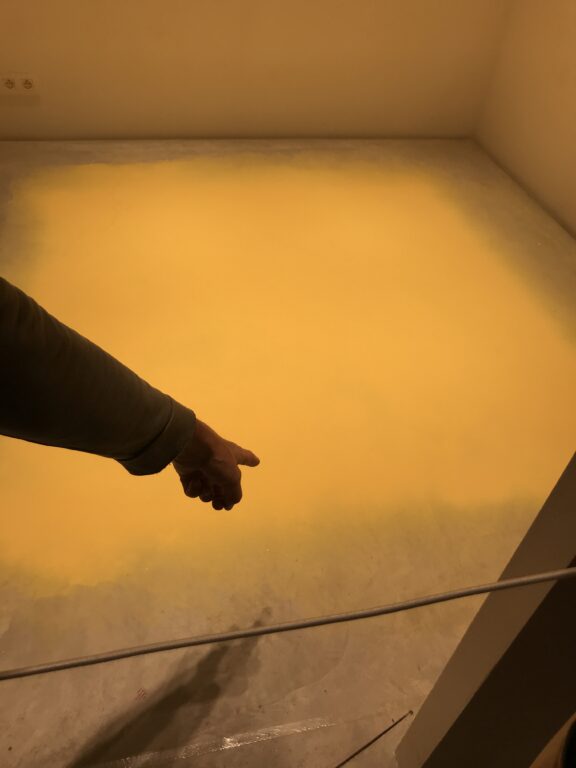
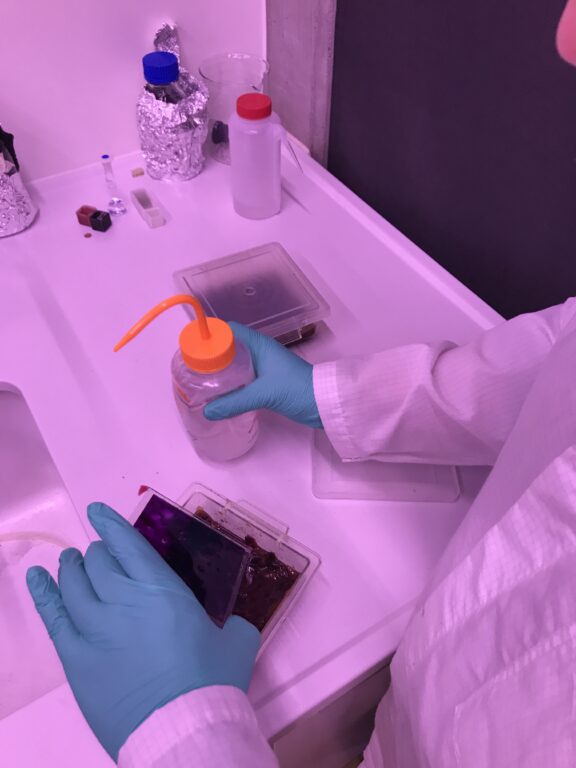
Soon after, Allyson is rinsing dye from solar cell glass pieces with an etched photographic image in the pink light of one the X-LAB-labs.
Lorem ipsum dolor sit amet, consectetur adipiscing elit. Ut elit tellus, luctus nec ullamcorper mattis, pulvinar dapibus leo.
Lorem ipsum dolor sit amet, consectetur adipiscing elit. Ut elit tellus, luctus nec ullamcorper mattis, pulvinar dapibus leo.
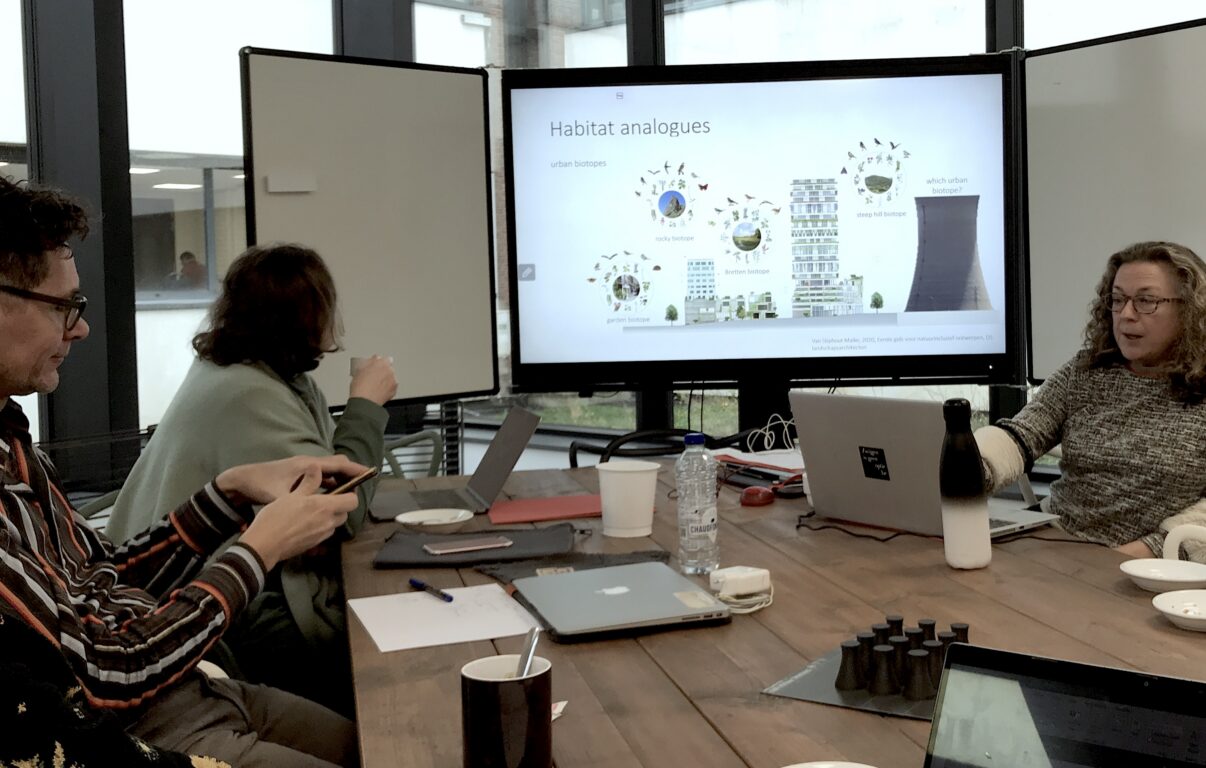
In the second Inspire session Griet Verbeeck from UHasselt/ArcK, kindly integrates cooling-tower perspectives into her research on more sustainable and regenerative choices in the building sector. Inspired by the principles of doughnuteconomics and sufficiency, she focusses especially on the use of natural resources with attention to social justice andplanetary boundaries.
Most part of the afternoon is on addressing the Elephants & Flamingos – identifying the unseen and in the face challenges and ways of dealing with them.
The second Thought Exercise advances the imagining of a Koelleven research article in a speculative publication. The idea of publishing in an environmental humanities journal surfaced, alongside the idea of the book by G. Decamous, Invisible Colors: the Arts of the Atomic Age.
Christina facilitates the timeline conclusion and attunement towards Workshop III.
Allyson´s cake care provides celebratory kiloJoules marking the ending to the two days of joint musing and 3D-printed miniature cooling towers for everyone.
Note: The above includes parts of biographies and notes that were sent as part of the feedback email follow up.